Showing posts with label Farming. Show all posts

Saturday, 19 May 2012

Culled All Our Poultry ~ Mycoplasma

It is my belief that I contacted this disease this spring when I brought in a bunch of chicks from else where.  After I had the chicks for about 10 days, I noticed a very sick little cochin chick who had very puffy gummy eyes.  I thought it was an eye infection so, I tried to clear it up with antibiotic eye drops.  Well, the eye drops did nothing to clear it up.  Soon I noticed the same symptoms in some of my other chicks.  Then chicks started dying.  I lost 11 of the shipped cochins first to this, and it also spread to my own chicks that I hatched which were very active and healthy until the shipped birds were added.  It also spread to my meat birds and to my turkey poults.

Their symptoms were:

Eye and Nasal Discharge
Sneezing
Coughing
Wet gurgly sounding breathing
Lack of appetite
Swelling of the sinuses and around the eyes.
And tissue swelling and red in the corners of the eyes.

I thought I would include some pictures to show what some of the chicks looked like.

In this chick you can see how the face is swollen.  It's all puffy about the eyes and sinuses.  In some cases the eyes are sticky and glued shut so that they can not see.
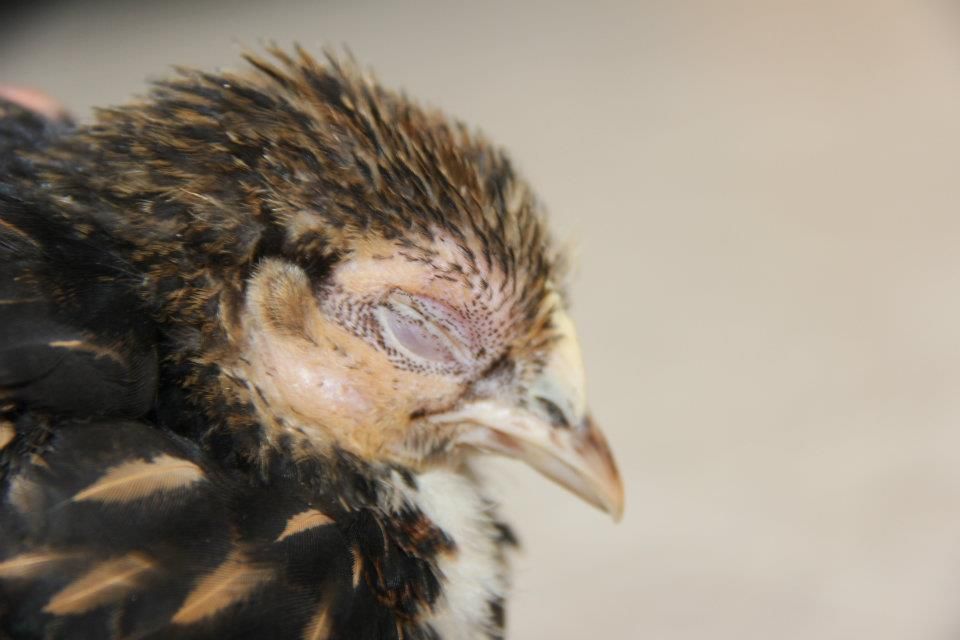
The chick stands all hunched up and ill looking.  Eyes only partially open.  Not showing much interest in eating or drinking.  Chicks cough and sneeze.
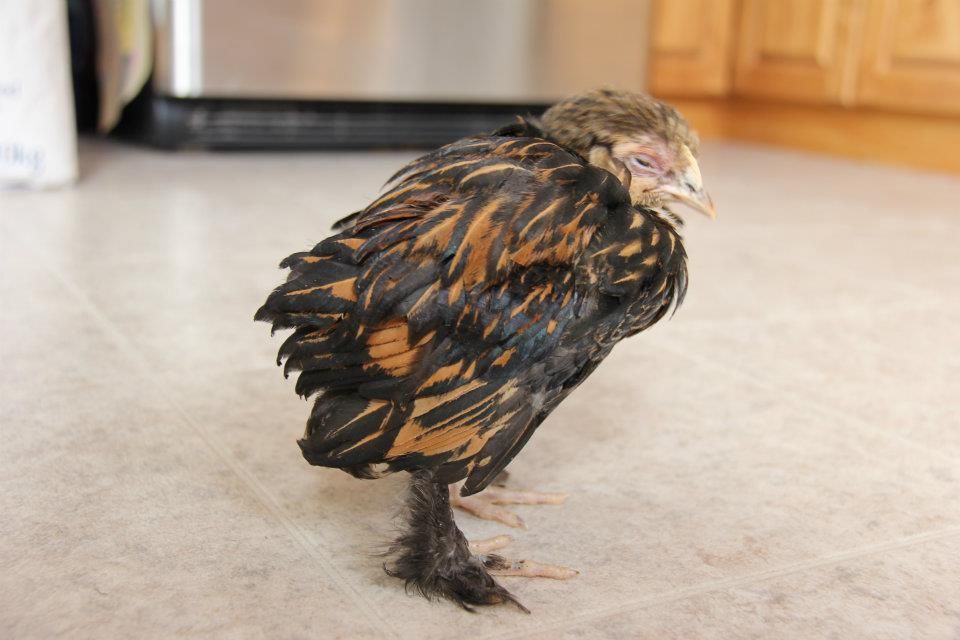

You can see this chick has been rubbing it's eyes on it's shoulders.  You could also see nasal discharge.
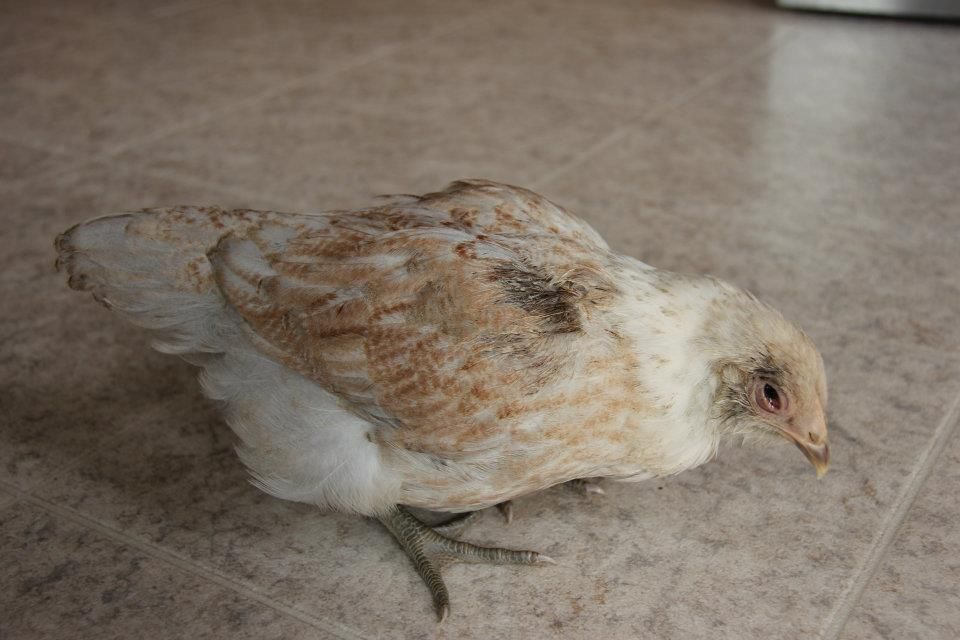
I'd been medicating this chick, but even so you can see that the corners of it's eyes are inflamed, red and visible.
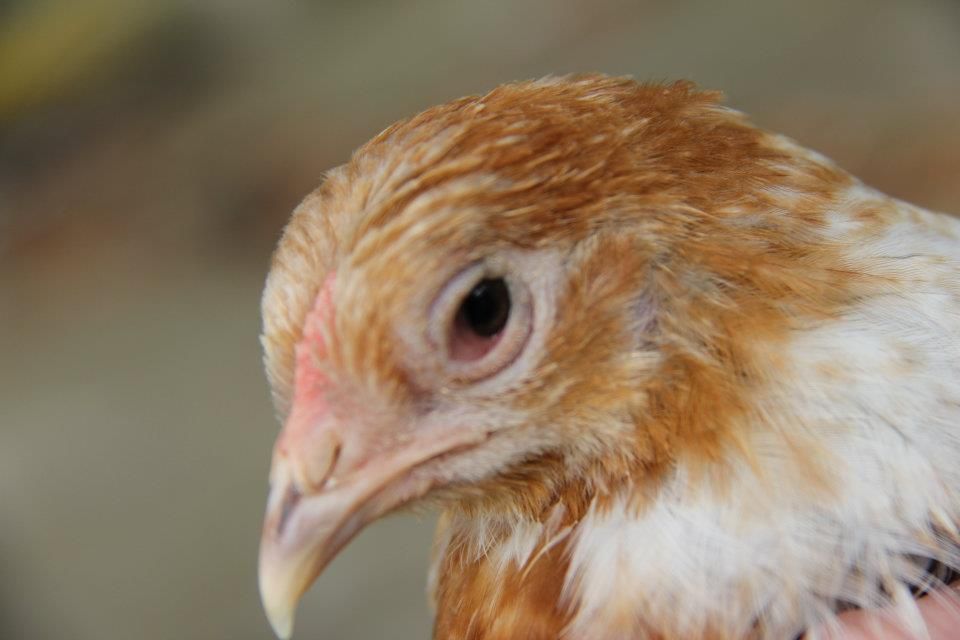
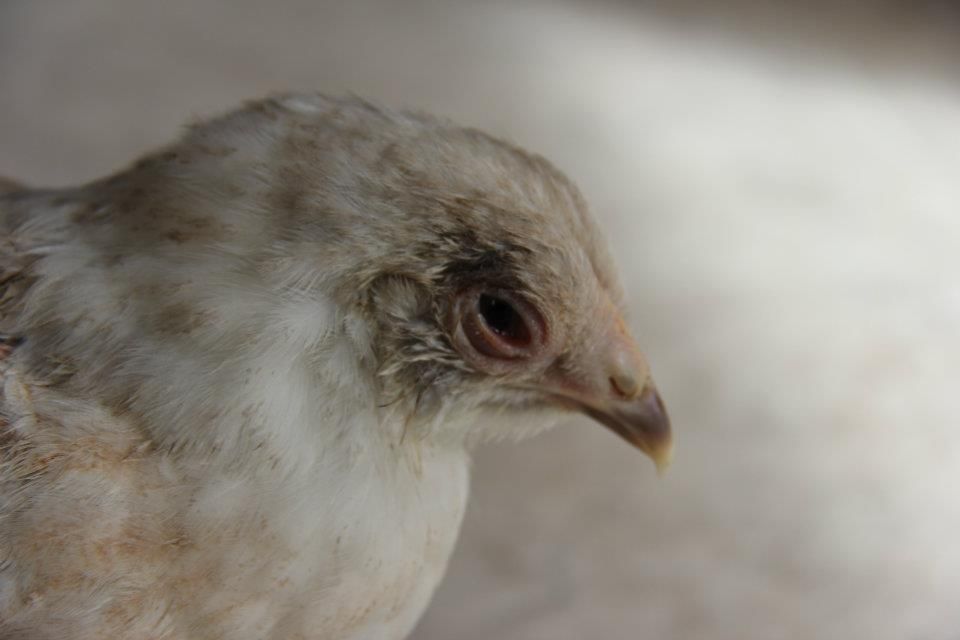
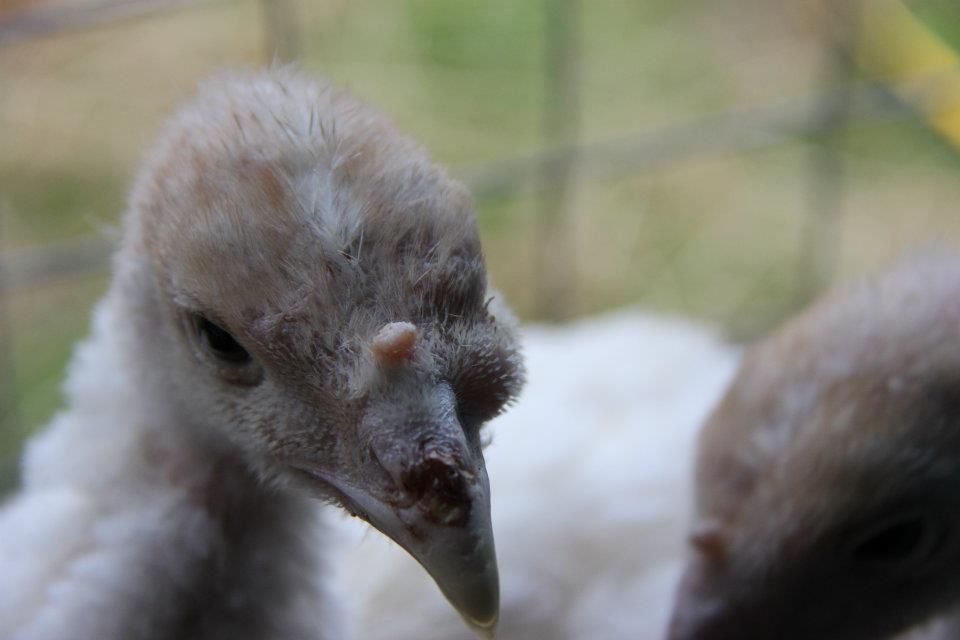
The Turkeys had lots of swelling around the eyes and sinuses.  They eyes also were gummy with discharge around them.
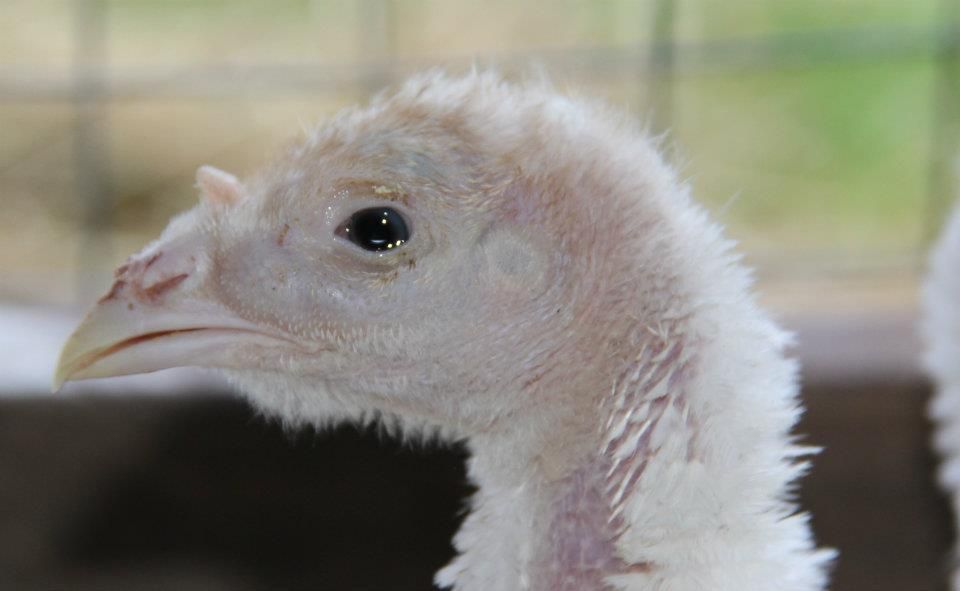
In some of the eyes you can see how watery they are.  Also bubbles are present in the eyes.
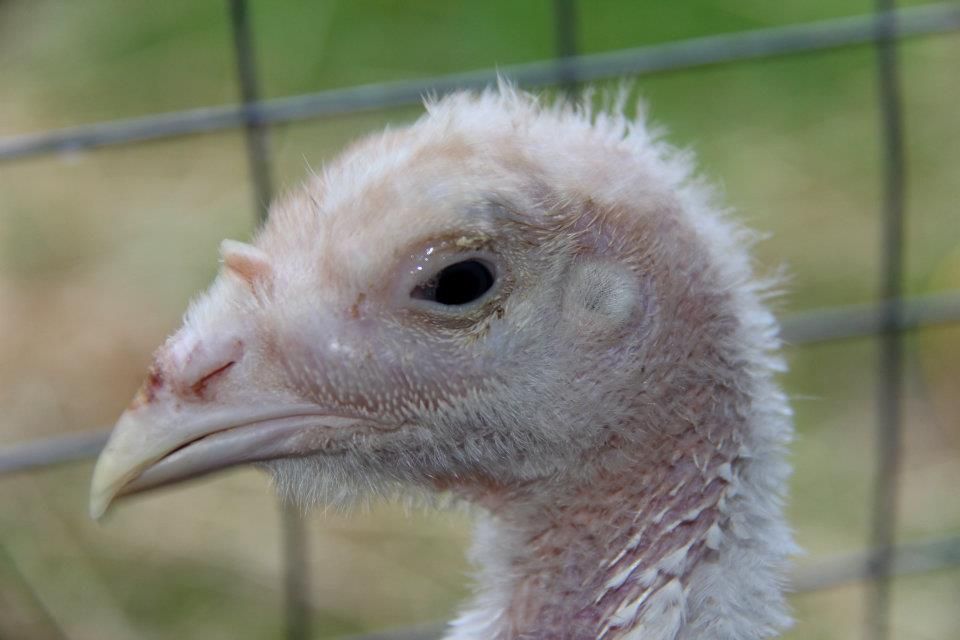
You can see just how much they eyes are swollen under them.  Some of them had swelling in one or both eyes.  Because of the shine, wet looking discharge the turkeys pecked at it hence the wound above the beak. (probably spreading it further...)

After loosing several of the cochins, some of my own hatched and some turkeys, I sent in 2 turkeys and 3 chicks to be tested.  These birds had to be freshly culled and sent with icepacks to the Animal Health in Abottsford to have a postmortem and tests done on them.  To cull them I used the cervical dislocation method, which is fairly quick and bloodless, since they want the bodies intact.  So I culled, packed and sent off the birds.

A day or two after they received the birds I received a message that there was Mycoplasma present.  I spoke with the vet over the phone and he confirmed that Mycoplasma was indeed present in our Turkeys.  He hadn't gotten the test results back from my chicks that I sent in yet.  I had been medicating the chicks so he said that it would be hard to detect it in them since the symptoms had been cleared up.  It was agreed that since my turkeys had it for sure, and they had been in contact with my entire flock older chickens, chicks and guinea fowl that everything was exposed to it and it would be best to cull it all, clean house and start over in about a month or so (I decided to wait a year before starting again.)

Mycoplasma is a contagious respiratory disease that poultry can get.  It's a chronic' disease, and even though the birds can and most times do survive this, they remain carriers and can pass it on to other birds.  They can pass this on through coughing, sneezing, dust, eggs and semen.  Incubation period for it is 10 - 21.  This disease is fairly common apperently.  But as someone who breeds and sells poultry, I felt that it would be unfair of me to keep my birds and risk infecting anyone elses.  

You can read about Mycoplasma here:  

So last week I culled all my poultry.  This was an awful thing to do.  I still feel horrible when I think on it.  It's one thing to cull a badly injured or dying bird that you know is suffering horribly.  But it's an entirely differnt thing top pick up a bird bird that looks perfectly healthy and end it's life.  I know that even though they look healthy they could be carrying mycoplasma and pass it on to anyother poultry that I bring here.  But it doesn't make it any easier.  Many of these birds are ones I have raised since they were either eggs or day old chicks.  Most of the older ones were pets.  I was very attached.  

I also used Cervical dislocation to do this.  How I did it was to take the bird,  Hold it to calm it.  Grasp the feet in one hand, support the body in the other and lower the bird so that it is upside down with it's chest and neck laying on the ground before you.  Place a broom handle across the back of the neck behind the head, step on the broom handle quickly one foot on either side of the head and quickly and smoothy pull up on the feet.  Pull up until you feel the neck give.  This dislocates the neck, and ruptures the blood vessels in the neck.  It is supposed to be painless since it also severs the spinal cord (but who's to say just what the bird feels).  I couldn't bear to see the birds flop around so I held them as they passed.  After all these were my pets and it broke my heart to do each one.  (See, I still tear up when I think of it.)

After I finished culling, I made a big  pile of brush and dry fire wood and got the fire going good and hot, then burnt almost all of the chickens, except for my daughters 2 favorites.  My daughter wanted to bury them, so I felt that this would be a good way to perhaps bring her some closure too.  We dug a hole by a cedar tree, lined the grave in ferns, placed the little hen and rooster in and covered them in more ferns.  RIP little Millie and Little Peep.

After I thought I was pretty much done culling and burning, I was going to go into the house, but thought I would do one last egg check to see if any were missed earlier (and I guess just to go into the empty hen house and say a silent good bye).  While I was standing in there, I heard a cluck.  Yes, a cluck coming from outside in the pen.  I couldn't believe it and almost thought I was hearing things.  I went out to the pen, and out from behind some glass windows leaned up comes one last Blue Laced Red Wyandotte hen.  It was almost like one of those bad dreams when you think that it can't get any worse, and then it does.  She comes running over to me.  Oh my!  Here I was thinking that I was finished killing and the worst was done and over with and out comes this last bird.  So I picked her up. Sat on a bucket.  Held her and had a serious cry.  I never imagined in my life that I would have to kill anything.  Let alone chickens which I love.  It was so tempting to keep her, sitting there with my face buried in her soft feathers.   But it needed to be done.  I did it, and probably that one last one is what stands out most in my mind now.

Anyways, all of my birds are gone.  Chickens, Turkeys and Guinea Fowl.  The yard is strangely quiet when you go out side.  We've had a few neighbors stop by and comment on the lack of birds about.  When offered condolences, I really don't know what to say.  

I have shoveled out the coops and am working on scrapping them down, then I will disinfect them.  I need to pick up one those car wash brushes that you can attach to a garden hose to help me scrub down things, and garden sprayer to spay disinfectant.  And so now the clean up begins.

When I do start over, I will try and just bring in hatching eggs and treat them with an egg dip of Tylan, which is supposed to kill any mycoplasma present in the eggs.  I will  be very careful with any new chicks brought in, keeping them separate  for at least 4 weeks to be sure they are healthy.

I have also bought a copy of The Chicken Health Handbook by Gail Damerow so I can look things up if anything shows it's self.

If nothing else this spring I have done a lot of research and learned quite a bit about this disease and about bio-security.  

Millie pigging out on cookies 


Sunday, 29 April 2012

Sick Chick Update.

Well, I've been avoiding writing about what's going on here with the chick situation.

To tell you the truth I have been so disheartened about it and am just having a real hard time.

My Chicks are still sick.  Several have died.  Some on their own, and some I've had to cull because they were so ill.  

I'm not exactly sure what is wrong with them, but I suspect Mycoplasma.  They are showing several of the symptoms of it.  And so are the Turkeys.

Their symptoms are:

Eye and Nasal Discharge
Sneezing
Coughing
Wet gurgly sounding breathing
Lack of appetite
Swelling of the sinuses and around the eyes.
And tissue swelling and red in the corners of the eyes.

It's really been quite scary.  Actually I've been terrified.

If it is Mycoplasma, it is quite contagious and because I had moved the meat birds and turkey's into the grow out pens in the main coops, all of the rest of my poultry have been exposed to it.  Even if they survived this intitial outbreak of it, they would remain carriers for the rest of their lives and can pass it on to other birds.

I have had them on Tylan and on Oxytera-a which is an antibiotic as well.  Their symptoms are somewhat better in some of them, but it seems that most days there is at least one death.  Lately it's been the meat birds, one by one.  A few days ago we had to put some turkeys down because the facial swelling was so bad.

I have decided to send some in for testing to see just what I am dealing with.

If it comes back that this is indeed what I do have, my husband and I have decided to cull our flocks.  This isn't an easy decision.  It's hard, hard, hard.  I've hardly been able to sleep and I have no appetite. I cry.  Lots.  But I think that this is what we have to do this time.  

I want to one day be able to sell hatching eggs, chicks and chickens and don't want to have to worry that I am going to pass this on to someone else.  I can't have that on my conscience.  There is a fear in me that friends or family who have poultry will come and visit me and bring this home with them on their shoes or clothing.  

From what I hear, I don't absolutely have to cull my flock.  I could just treat them as they have flair ups.  From what I understand, this illness is quite common and many flocks have it, but people don't know what they are dealing with.  The chances are good that I will actually end up coming into contact with this again.

But this time I will deal with it by culling.  Another reason we have decided to to this is so that we can continue to get and raise our Turkeys.  Turkeys are quite susceptible to this disease, as I have found out.  In fact, from what I hear, if you have Mycoplasma present in your flock, you should not raise turkeys.  We want to have our turkeys.  One day I would love to have some year round pet turkeys, and to do this we have to get rid of this disease.

Last week I phoned Dr. Cox of the Agricultural department.  He suspects that it is Mycoplasma too.  Especially when I described the turkeys to him.

So today, I went and spent some time with the chicks watching and listening to see who looked and sounded the worst to send in to be tested.  Not an easy thing to do, picking out baby chicks and turkeys that you know you will have to kill first thing in the morning.  I'm not looking forward to it at all.

But I guess knowing what I am dealing with will bring a certain piece of mind.  Knowing if by culling that I am making the right decision.

If it comes to culling, I can't imagine what it will be like to not have anymore chickens, turkey's or guinea fowl for a while.  The wait time after disinfecting for mycoplasma is about 3 weeks, which isn't that long.  But my husband would like to wait for a year before I get anymore birds.  

For a few days there, I could hardly go out and look at my birds.  I fed, watered, and collected eggs as quickly as I could, because I felt so guilty about having to cull them.  Most of my main flock I have had as chicks or hatched from eggs.  I interact daily with them.  They are more then just chickens to me.  The majority of them are pets.  My chickens over the years have given me great joy, comfort and entertainment. They are my escape on a hard day when I need quiet time.  It may sound weird but on a bad day, I go and stand in my chicken house in the evening and just watch and listen to the chickens.  It's comforting. 

Anyways, tomorrow is the day to send them away and then the long wait to get the results....  

I think it will be hard to sleep tonight....

Wednesday, 18 April 2012

Chick update

I thought I would give an update on how the chicks are doing.

Well, They aren't doing so hot.  It seems that some how we have come in contact with an illness.  It also seems to be contagious, because most of my chicks are now coughing, sneezing, gurgly breathing, have puffy eyes and are all huddled under the heat lights.  I've had several deaths too.

This has really been stressing me out and I have been so worried.

When it first started, there were some puffy eyes, and I assumed that my turkey poults who were in with the chicks were pecking eyes.  There was also some sneezing, and I put his off to that maybe they had gotten a chill when one of the 3 heat lights got unplugged.

So I moved the turkeys and plugged back in the heat light.  But puffy eyes were still happening, and the sneezing turned to coughing and gurgling.  I put them on Electrolytes and Vitamins, and in draft free area's.

The other morning I had 3 chicks die.  I sort of panicked, because I've never dealt with illness with this many chicks before.

The chicks seem to have come down with Mycroplasma.  I don't know for sure, because I haven't had them tested, but they have the symptoms of it.   Both the Chicks (both heritage and meat birds) and the Turkey Poults have it.

I was really hoping that I could get away without the use of antibiotics.  Especially because of the meat birds, some of which we planned to butcher in 2 weeks.  But with them this ill, and all the risk of loosing so many I put them on Tylan last night.

When a friend of mine heard of my plight, she rushed all the way out here with some medication.  I can hardly beleive the kindness and generosity of this lady.  I am so very grateful!  I hope one day I can return the favour (Only I would never wish this on anyone.)

So now that they are on the medication, I feel a ray of hope!  So far today we haven't had any die, so that's just awesome!

And now we wait to see if the Tylan kicks in and things turn around.

Saturday, 31 March 2012

Chick Photo Shoot!

I decided to do a photo shoot of some of my chicks last week.

The Barred Cochins were really working it!


The Turkeys didn't know what to think!
Typical long legged model...

The Meat Birds making the most of their cute faze.

Blue Laced Red Wyandotte.  How could you know love that face?

The Blue Laced Red Wyandottes were relaxed.

Taking a little down time.

Maybe a little too relaxed?

The Rhode Island Red thought they were above such nonsense!

The Frizzle X Polish thought they weren't paid enough to show their faces...


Thursday, 22 March 2012

Gettin' Ready For Meat Birds and Turkeys!

Yes, today I am getting ready for the big day tomorrow!

Tomorrow we are bringing home 25 day old turkeys, 60 day old meat birds and 10 day old Rhode Island Reds.  That's a total of 95 chicks in one day!  (Not counting the 24 I already have and the 30 Cochins I have coming next week!)  I'm secretly excited about it for now.  I'm sure the excitement will wear off fairly quickly once they get bigger, lose that cute fuzziness, the dander and smell gets to me.

Last week I built a nice Brooder Box.  It's 8 feet by 4 feet wide and the sides are about 2 feet high.  I divided off a section with a removable piece so I can have a smaller part for other chicks.  I lined the bottom in Vinyl to make for easy cleaning.  Then spread shavings on top of that for litter.

I use red heat lights, to help prevent the chicks from picking on each other.
I have hung a heat light about 18 inches up off the floor, for warmth.  The water is up on a pizza box out of the shavings, and I put the food on a piece of vynle flooring to help keep some of the shavings out of it (same reason I put the water up).  When the chicks are bigger I'll put the food up on something as well.

Here you can see the chicks that I hatched last week in the small section of the brooder.

I know that soon they will outgrow the lovely little brooder I built,  and I'm desperately hoping against all hope that the snow is gone by the time I want these out of the basement.  (Fat chance of that.  I think the snow plans on staying around for a while!)

Anyways, there you have it.  There's my brooder set up in my basement.  I also have a brooder box in my chicken house, and some grow out pens as well.  I'll have to get around to posting pictures of those.  


Monday, 5 March 2012

Rotten Ronnie Strikes Again!

Yes, the little bugger was up to no good!

Well, I guess, I should take some of the blame my self.  After all, I should have done a rooster count last night when I tucked everyone in.  But I will admit it.  I didn't.

It all started yesterday when I let the roosters and guinea fowl out, so the run-a-way guinea fowl would be enticed back into her coop.

The roosters came out and went down the trail.  Now if you have read my poem about Rotten Ronnie, you would have seen that he and The Fonze my polish rooster, were enemies.  But now they are fine friends, hanging out together when you let them out.

A few days ago when they were out, they snuck into the Mini coop which is buried in about 3 feet of snow.  The door to it was open about 6 inches enough for them to squeeze in, but not enough for me to get in to get them.  So I waited until night when they went into the little house part.  I could open that door enough to reach them.  So I got them when they bedded down and returned them to the main Rooster/Guinea Fowl coop.

Well, yesterday when I let them out, they remembered this little get away, and snuck back in there.  A while later the wayward guinea fowl was captured, and I herded everyone back into the coop.  The Fonze was on the trail, and I had to literally pick him up and carry him in, because he was refusing to go in his self.

Now, I had company over while this was all going on, so I finished up and went back in to resume visiting.  They left and I made supper and what not, then later in the evening, I went out to shut the hens in.

At this point, I just want to say that since fall, I have kept my roosters separate from the hens, so come spring, I can pair them up and begin collecting eggs, without the 6 week waiting period for one roosters rooster juice to run out and the proper one's to take over.  I have been very careful about this.  Warning kids with in an inch of their lives to never open both doors at the same time, or to let the Roosters get in with the hens.  I have seriously had nightmares of this and woken up in cold sweats.

So today was a bright and sun shiny day, and I figured since the Roosters have been out everyday since last Thursday, it was the hens turn at some freedom to soak up the rays.

Just now, I went out to shut the hens in, and who did I see so proud amongst the hens?!  Why that Rotten little Ronnie, all standing tall like he was the king and had every right to be among the lovely ladies.

It seems, he didn't go in yesterday with the roosters.  Instead he opted out to spend the night by himself in the mini coop where I couldn't see him, because the snow is so deep around it.  Yes, he must of thought he was in heaven today when he climbed up out of the snow surrounding the coop and seen the hens.

This little dude is like the Energiser Bunny,  and he's had a little lost time to make up for (not counting the short time I had him paired up with a silkie hen a few weeks ago).  He's not picky on the size of the hens, so I can only assume that he was getting while the getting was good.

I am shaking my head at myself, for not remembering him yesterday.  Now I will have to wait another 6 weeks until I can pair up the chickens to collect eggs for hatching.  That takes it to April 16th.   Oh my!

Saturday, 3 March 2012

Chickens Are Not Vegetarians.

Despite what many people are led to believe chickens are NOT vegetarians. 

Here's the thing that gets me.  I've seen TV shows that promote buying Vegetable fed chicken meat from stores.  Vegetable feed chicken being healthier.  This bugs me.  

Chickens are not vegetarians.  They are Omnivores and will snap up a morsel of meat in a second!  They need this protein in their diet.  Is it fair to deny them meat (or bugs)?  As a person, you have a choice weather you want to eat meat or not.  And that's all good.  But feeding chickens a diet of veggies (and grains) just isn't natural for them, and you are denying them the choice to eat meat, therefore taking away their choice of a part of their natural diet.  Is this fair to the chicken?  Chicken rights!!! Ok, I'm just being silly.  But it does bug me that so many people are lead to believe that Chickens don't eat meat.

Chickens enjoy meat very much.  I recall several instances in which I have seen chickens consume it of their own free will.

One time, my parents came out to camp in their van in the yard.  We were having dinner, and their little Weiner dog was running around scarfing up the chicken food.  We threw the dog a piece of meat, well, the chickens got very excited about this and grabbed the meat before the dog could get it and ran off with it.  Funny thing to see the dog eating chicken food and the chickens eating her meat.

Chickens are mighty hunters, though you might not think so.  You can see them at it in the long grass or the leaves, as they look for their little prey, be it bugs, frogs or mice.  They remind you of Raptors, but don't they say, that chickens are distant relatives of the dinosaurs?

A few summers ago, while we were outside, we heard a screech, and looked up to see our daughter chasing a chicken screaming and yelling at it.  Big Butt, the chicken (named for her big, bulbous, bald butt) was running flat out, with a trail of chickens racing behind her, and behind them was my daughter.  Dangling, kicking from the mouth of Big Butt was the grand prize.  A frog.  Big Butt, then somehow managed to get far enough ahead that she had time to eat her dinner.  I don't think Madeleine ever forgave Big Butt.

Woe to any mouse that happens to try and sneak into the chicken house during the day.  Those chickens will take it down.  I have seen chickens chase , catch, kill and eat unfortunate  mice with great relish, and I don't mean the kind you have on your hotdogs.  

Chickens are rather smart at times.  They have it figured out, that if they follow the cat when he's hunting, that he will either scare up mice or they can steal mice that he catches.  I've seen this too, where they steal the cats mouse.  Last winter, the cat had a mouse he was bringing home still alive, and the chickens intercepted him and stole it.  The mouse didn't stand a chance between the cat and the chickens.

Just today, while I was outside trying to take pictures of my daughter, feeding the chickens scratch, they found a mouse.  I don't know if it was one they had or one the cat left, but the chase was on!  One chicken will be running with it, looking for a place to hide and eat it, and another chicken will steal it, and they will just keep on going.  Yes, these chickens today, chose the mouse over scratch.  (I  have to admit that I disposed of their mouse.  It was in bad shape. )

The smallest hen, claims her prize!  .... for a second!

My chickens get scraps from my kitchen.  Included in these scraps are sometimes cooked meat or eggs.  I feel that what we eat, they can eat (although I avoid giving them really sugary or salty foods).  I've found that chickens can be picky with some veggies, or even fruits.  But I don't think I've ever seen them turn down meat.

Yes, chickens enjoy a good old feast of meaty food.  Theirs no denying that, if you've ever had chickens.  But this is the nature of the beast.... Or shall I say, Chicken!

I want to add, that if I see my chickens eating mice that I try and get rid of the mice, because I worry about internal parasites being passed on from the mice.  Yuck!  

Tuesday, 28 February 2012

Incubator Issues

Last night I did a quick candle of the eggs in my incubator.  It looks like most of the Polish and Polish X Frizzle eggs are growing.  Some of the others, the shells are too dark for me to see through very well, yet.  Mind you it's only day four.

Since I have put the eggs in, I have been having trouble with humidity.  I just can't seem to keep it up.  The Brinsea Octagon 40 has four slots in the bottom, and you are supposed to fill two of them up with water and keep topping them up until lock down.  I had the vent closed 2/3rd of the way.  And still the humidity would not go up.  It was staying at 25 - 30%.  I tried closing the vent all the way.  No Change.  I also noticed that the temperature went down one degree to 99.5 (was about 100.5).

So last night I did my candle, and topped up all four of the water slots with very warm water.  Put the lid back on and crossed my fingers.  After a few hours, before I went to bed, I checked my incubator and noticed that the temperature varied.  I have 3 different thermometers in my incubator.  I thought this was because I had the lid off and it was still catching up in temperature.  The humidity was reading 60% with all 4 slots filled with very warm water and the vent closed all the way.

This morning I got up and checked my incubator. and was surprised to see that the temperature was still reading low, so I turned it up slightly.  One (the Spot Check) has the probe sitting in between the eggs about centre of the egg.  One is sitting on top of the eggs, and the other is stuck on the lid about half way up the lid.  All three thermometers are now giving me entirely different readings.  The lowest (in the eggs) is reading 97.8, the middle one is 98.3 and the highest is 99.0 degrees.  It's been a few hours now, and still no change to the temperature, so I just turned it up a little more.  Also the humidity is back down to 40%.  

Oh, did I mention that the turner is clicking?  I noticed it last fall when I did a test hatch but thought it might be because it was new and working out kinks.  But it is still clicking and worse now.  It clicks ever 5 - 20 seconds.  I've tried to re- adjust the incubator on the turner, WD40ing it.  It sounds the same when the incubator has eggs in it or empty.  I contacted the company and my clicking issue has been sent to the top guys, and I haven't heard back from them.  The clicking is quite loud, so that we can hear it upstairs in our bedroom with the door shut.

I feel rather sick about the whole thing, because I have wanted a good incubator for so long and it was a big deal for me to get this one.  And I really had to talk my husband into it, saying that Brinsea were top notch incubators.  I haven't mentioned to my husband the temperature issue that has risen yet.  He was all for sending it back last year when it arrived without the digital control, and again the other day when we got it going, and it was clicking again.

Ohhhhh what shall I do?  This is only the second time I have used this incubator.  

Monday, 27 February 2012

Glorious Guinea Fowl

If you've ever been in Usk in the summer, perhaps you've heard my guineas, or seen them as they sneak through the grass in my yard hunting for bugs.

I got guinea fowl a few summers ago, by getting some eggs shipped to me from a very nice lady all the way in Saskatchewan.  My neighbour had an incubator, and so we popped the beautiful little eggs into it.  Twenty eight days later, the cutest little chicks chicks hatched, and I took them home down the road in a little box.

Taking them out of the box to put under the heat light, I was so excited!  Their little legs and feet were the brightest of oranges.  Baby Guinea Fowl are called Keets.  I fed them chick starter.


Baby Guinea Fowl aren't the friendliest of chicks.  I think they are a little wild, and are more flighty then chicken chicks.  They don't seem to enjoy being cuddled as much, and peep very loudly when you catch them.  I have heard if you handle them often from day one, every day that they can become friendlier.  They are also pretty good at flying as well, from a young age.  I had one escape from the brooder in the basement once, and it took me a long time to find it.  Finally I heard it peep, and found it on top of a stack of egg cartons, on top of the fridge.  Wow.

Their first set of feathers that come in, aren't spotty, but have a brownish color with fine stripes in it.  I imagine, this is because in the wild in Africa, everything wants to eat a guinea fowl.  At 8 weeks old they are starting to get spotty.

This one isn't really spotty, but more of a pretty blue purple colour.  She's just getting in her big girl feathers.  There are different colours of Guinea's but I mostly have Pearl Guinea Fowl, which are the most common. 


Pearl Guinea Fowl.  They have the prettiest feathers all spotted.  People use their feathers for tying fishing fly, feather jewellery and crafts.  This one is quite young.  Her helmet on her head is still growing, and the downy strips have disappeared.


I have found Guinea Fowl to be quite hardy birds once they get past the small chick size.  They seem to handle winter well, and be quite resistant to the more common poultry diseases.  These one are out on a cool winters day enjoying the sun. 

Who would have ever thought that a bird could have such pretty eyelashes?

Guinea Fowl are pretty hard to tell apart when they are young.  Even as adults it can be very difficult.  One of the ways you can tell the female from the male is by listening.  The female makes a loud sound when she calls that sounds kind of like she is saying "Buck-wheat!  Buck-wheat!"  If you look closely when they are older, you will see that the females have smaller wattles and helmet.

The male has larger, brighter wattles and a larger helmet.

I don't know if it is normal or not, but I noticed one thing last year.  Mine seemed to pair up.  I had two males and two females.  And they each seemed to stay with their mate.  Well, they would also hang around in a group, but it seemed that if they did split up, it was in pairs.

One of my hens went broody.  She just sort of disappeared, and I would see the male walking around all by his lonesome.  But he seemed to be hanging around my Black Currant patch.  One day, when I noticed her in the yard, I watched her, and seen her disappear into the patch.  I followed her and seen her hidden in the middle of the patch. 

When she next came out, I went and looked and sure enough there was a nice big clutch of eggs.  She had both chicken and guinea fowl eggs she was sitting on.  I removed the chicken eggs and tossed them, not knowing how old they were.

Guinea fowl are seasonal layers.  They lay in the spring and summer months.  Their eggs are a smallish egg, with a round bottom and a pointy top.  They have very thick hard shells.  I have heard them called Saddle Eggs, because they are good to take camping or horse back riding, because of their toughness.

The male seemed very lonely when she was sitting.  He would try and hang around with the other pair of guinea fowl, but the other male guinea fowl, kept chasing him off.  Then he would fly up onto the chicken house and call, and call, oh so lonely without his lady love.

I felt rather sorry for them.  He in his loneliness, and she in her broodiness.  She sat there, day after day, for almost a month.  Rain or Shine, she sat there, only occasionally coming out for a quick bite to eat or drink of water.  I peaked in once when it was raining, to see her hunched over her precious brood of eggs, keeping them dry and warm.  I wasn't sure what to do for her, because I didn't want to disturb her.  If I got to close she would run off the nest, so I just left her and crossed my fingers, occasionally checking to make sure she was ok.

Finally the day came when she emerged.  and behind her were 5 little keets, all peeping.  We were so happy, and so was the papa.  You can see the babies hidden in the grass.

Well, one thing about guinea keets is, they don't handle dampness well.  We live in an area that has lots of rain, and I worried for these little guys.  So I caught the babies as they struggled through the grass, putting them in a bucket.  Of coarse, Mama was very concerned.  Guinea Keets peep very loudly, so I took the bucket and put it in a little covered pen.  The babies, continued to peep, and of course Mama followed the sound of her darlings into the pen.  I reached in, gently tipped the bucket over and shut the gate.  It was actually easier then I thought it would be.  The Daddy hung around outside of the pen, watching his love and their babies.

I left them in the pen for about 6 weeks until their feathers came in, and they could handle the dampness of the grass, then let them out.   To be honest, I wasn't sure how the daddy would react to his babies.  But it turned out he was a great Dad.  They took to him, and he to them.  

Mama and baby.

The beautiful family.

It was really neat seeing them go as a family group, the babies following both parents.


I incubated some of my own guinea fowl as well last summer.  They incubate similar to chickens, but you need higher humidity, and it takes them 26 -28 days to incubate.  For the first 25 days, they need to be at 65% humidity, and for the last 3 days up it until 80%.

And they're so darn cute!

When they were old enough, I let them outside to free range with the rest of them.  It didn't take long for the youngsters to leave the company of chickens and go to mingle with the rest of the guinea fowl.  It's a good idea to keep young guinea fowl or new adult guinea fowl locked up for several weeks until they know were to return in the night.

You can see a few different ages of guinea fowls going, but from the hens brood and the ones I incubated.  All getting along.

There is something about watching guinea fowl free ranging in the yard.  They always seem to be on the go.  Sometimes watching the guinea fowl go, they remind me of ladies of olden days with long skirts lifted as they daintily step across the lawn, with their little legs and feet peeping out from under the polka dotted feathers.  They are really entertaining to watch.  Sometimes they are sneaking along, looking for unsuspecting bugs, then the next minute they are running as only the guinea's can or taking off in flight. 

Guinea Fowl are excellent foragers, and free range very well once they know were home is.  They are great at eating all sorts of bugs, like ants and ticks.  They also seem to enjoy the odd berry, grain and crusts of bread, given the chance.  Other then that, my guineas basically eat whatever I feed my chickens, including Layer.  In the winter, they get layer and scratch and seem to do well on this diet.

Although, I've kept guinea fowl in the past with the chickens, I find that in the winter, it is better to keep the guinea fowl in a separate chicken house, as the male guinea's can be aggressive with the chickens, and sometimes horde food.  In the summer, I let the Guinea fowl free range with the chickens, and the chickens quickly learn to stay out of the way of the guinea fowl.

Guinea Fowl make excellent guard birds.  They are not aggressive to people or other animals, and keep a sharp eye out on the sky and on the yard.  If anything comes around they sure let you know.  They will all start screeching at once, very, very loud.  For this reason, perhaps if you live in an area with close neighbours, guinea fowl might not be a good idea.

Last summer several times they alerted us of hawks over head, or attacking chickens.  In one attack we were surprised to see the guinea fowl running around in circles and right up to the hawk who was eating my favourite rooster.  Boy, was I surprised at their nerve!  I'm not sure it they are very brave or very stupid.  I like to think that perhaps they were just keeping a close eye on the danger.

Another time, we were woken at five in the morning to a racket, and looked out the window to see the guinea fowl taking off at a run, screeching all the way.  There was a bear in the yard, and they were letting us know.  One thing we noticed, is that guinea fowl squawk all the time, but if they are squawking, and running, take notice.  Even the chickens have learned to heed the call of the guinea fowl, and will run for cover.

Sometimes though, the guinea fowl just like to make noise for the sheer sake of it.  I notice that just about every evening, they like to fly up onto the chicken house roof and sit there and call.  I enjoy the call of the guinea fowl most times.  I think it gives an exotic feel to the evening, and if you close your eyes you can imagine yourself in far away lands.

There are times when I question the intelligence of these birds.  A couple times now, in the winter, when I let the birds out to go down the trial, or onto the porch of the chicken house, I have had them fly up into tree's.  One thing they do not like to do is land in snow.  These birds are so stubborn about it, they will sit in the tree, or on a pole, until they are week with hunger, and if you are lucky enough to hit them with a snow ball and knock them out of the tree you can get them back.  My husband threatens to shoot and eat them next time.

Guinea Fowl up on a pole.

Have you ever seen anything so sad?

Guinea Fowl are also supposed to be very good eating, tasting like a cross between chicken and turkey, I have heard.  We've yet to eat them, as any offspring that we haven't kept has quickly found homes.  Hopefully this year, with our flock built from 4 to 8 (I sold a bunch last summer), we will get to taste some.  I also plan on keeping the feathers of any that we do eat.

Yes, guinea fowl, the strange and unusual bird in my yard.  They are a bird that you either love or hate.  I find myself loving them.